
Our Blog

Labor Day: Our favorite holiday to rest!

August 29th, 2018

Labor Day, celebrated on the first Monday each September here in the United States, is a holiday devoted to the American working community. The purpose of the holiday is honoring the country's workers and their contributions to the strength of our country as a whole.

How Labor Day Started

There is actually some debate as to the origins of Labor Day. It is uncertain whether Peter McGuire, a cofounder for the American Federation of Labor, or Matthew Maguire, who was the secretary of Central Labor Union of New York, had the great idea. However, the Central Labor Union's plans were what launched the first Labor Day in America.

The First Labor Day

The very first Labor Day was celebrated on September 5th, 1882. The Central Labor Union then held annual celebrations on September 5th for what they called a working man's holiday. By the year 1885, the Labor Day celebration had spread to many different industrial areas, and after that it began spreading to all industries in the United States.

Labor Day Today

Labor Day today is a huge United States holiday during which we honor the country's workers with a day of rest and relaxation or a day of picnics and parades. This holiday is truly one to honor the many people who work hard to contribute to the economic well-being of our great country!

Our team at Hinnant Family Dentistry hopes all of our patients celebrate Labor Day, and every holiday, safely and happily. Whether you stay in the Goldsboro area, or travel out of town, have fun, and don't forget to brush!


Is there really a link between my mouth and heart?

August 22nd, 2018

Yes, indeed! While brushing, flossing, and regular visits to Hinnant Family Dentistry are all key to maintaining a healthy smile and mouth, Drs. Keith Hinnant, Kristen Langworthy, Philip Brantly and our team want you to know the state of your oral health has a significant effect on your overall health.

Our mouths are full of bacteria—some good, and some harmful. Some types of bad bacteria can cause cavities, gingivitis and even periodontal (gum) disease. Without proper oral care and hygiene, these harmful types of bacteria are capable of entering your blood stream through inflamed gums, when inhaled through the mouth or through saliva.

Gum disease, in turn, has been linked to a number of health problems, researchers have found. These include:

  • Heart disease: Gum disease may increase the risk of heart disease. Gum disease also is believed to worsen existing heart disease.
  • Stroke: Gum disease may increase the risk of the type of stroke caused by blocked arteries.
  • Diabetes: People with diabetes and periodontal disease may be more likely to have trouble controlling their blood sugar than diabetics with healthy gums.
  • Premature birth: Women who suffer from gum disease during pregnancy may be more likely deliver their baby early, and it is likely her infant may be of low birth weight.

Drs. Keith Hinnant, Kristen Langworthy, Philip Brantly and our team at Hinnant Family Dentistry are experts in identifying and treating periodontal disease. Give us a call today at our convenient Goldsboro office to schedule an appointment to improve your oral health and your overall health, too!

Post Oral Surgery: Signs of Infection

August 15th, 2018

Oral surgery can be intimidating, especially if you show any signs of an infection afterwards. Drs. Keith Hinnant, Kristen Langworthy, Philip Brantly and our team want you to be informed about what to watch for after you’ve undergone surgery.

Oral surgery procedures are intended to reduce pain and prevent infection. Sometimes complications occur after your surgery, and if infection ensues, it will require swift medical attention.

People undergo oral surgery for many reasons, such as:

  • Impacted or infected teeth
  • Tooth loss, jaw problems
  • Facial injuries or infections
  • Birth defects
  • Sleep apnea

Symptoms of Infection

  • Pain that won’t go away with medication
  • Steadily swelling of gums, jaw, or face
  • Redness or oozing of pus from the area
  • Fever that doesn't subside
  • Difficulty opening the mouth or jaw
  • Excessive bleeding for 24 hours
  • Difficulty breathing or swallowing (emergency situation)

After the initial surgery, don’t become worried right away if you notice any of these symptoms. It’s normal to show some blood and swelling after surgery, but that should stop fairly soon with the help of gauze and medication.

You will most likely be numb from the procedure and we will advise you to avoid hard foods for the first day. Pain medication will be administered, and you should take it before you begin to notice pain. A cold compress can also help with swelling and initial pain.

You will be advised not to brush your teeth in the region where the surgery occurred. You may use a prescription mouth rinse, or you can gargle with warm salt water to reduce the swelling. If you follow these directions, you can speed the healing process for a quick recovery.

Don’t fret: a post-surgery infection is not a common development. It happens most often to people who have a compromised immune system or diabetes. Let Drs. Keith Hinnant, Kristen Langworthy, Philip Brantly know beforehand if you have either of these and we may prescribe an antibiotic to help prevent the spread of infection in the areas of your mouth that get worked on.

If you think you may be experiencing complications after a surgery, please don’t hesitate to reach out to our Goldsboro office for advice.  

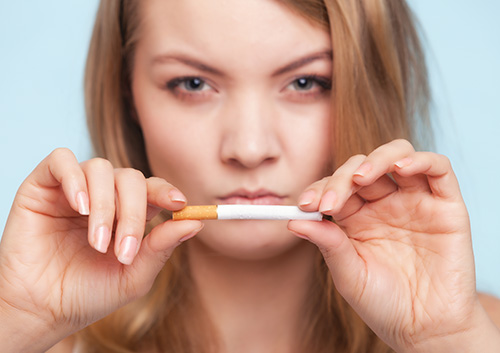
Does smoking affect oral health?

August 8th, 2018

By now, everyone knows that smoking is bad for you. But the truth is its broad-reaching health effects are not all known by everyone. This is especially true of oral health. Smoking can have serious repercussions in this regard. To give you a better idea of how smoking can affect your oral health, Drs. Keith Hinnant, Kristen Langworthy, Philip Brantly and our team have listed some issues that can arise.

Oral Cancer

Oral cancer can have steep ramifications for anyone that gets it. Surgery can be required to eliminate the cancer before it spreads to more vital parts of your body. Any type of cancer is about the worst health effect you can get, and this especially holds true to the affects that smoking has on your mouth. The type of mouth surgery required with oral cancer can leave your face deconstructed in certain areas, and it is all due to smoking or use of other tobacco products.

Tooth Discoloration and Bad Breath

At the very least, it is fair to say that as a smoker you will often have bad breath, and while you may try to cover it up with gum or mints, tooth discoloration is a whole other story. The chemicals and substances in cigarettes stick to your teeth staining them brown and yellow colors that are increasingly difficult to disguise.

Gum Disease and Loss of Bone

Another effect of smoking is the increased risk of gum disease. Your gums may start to recede, which can eventually lead to the loss of teeth. Smoking can also increase bone loss and density in your jaw which is vital to the health of your mouth. Gum disease and bone loss are two signs that smoking is definitely bad for your mouth.

When it comes to the health of your mouth, the question is not whether smoking affects your health, it's how does it affect your health and to what degree. If for no other reason than because smoking involves your mouth as its entry point, it is safe to say that it can have long-lasting and detrimental consequences on your oral health.

To learn more about smoking and your oral health, contact our Goldsboro office to schedule an appointment with Drs. Keith Hinnant, Kristen Langworthy, Philip Brantly.

Website Powered by Sesame 24-7™ | Site Map