
Our Blog

Should You Get Dental Veneers?

April 11th, 2018

Dental veneers are a popular treatment to improve the appearance of your smile. Drs. Keith Hinnant, Kristen Langworthy, Philip Brantly and our team want to help you understand whether this dental option is right for you.

Veneers, also known as laminates, are custom-made shells that cover the front of your teeth. They can change the color, size, or length of each individual tooth. The process can require between one and three trips to our Goldsboro office to complete.

This treatment is usually done for people who want to change the appearance of their smile: they can get rid of stains, gaps, or chips. Here at Hinnant Family Dentistry, we know how getting veneers can dramatically change your smile and help improve your confidence.

Your initial appointment entails preparing the teeth and creating an impression. The impression will help us design each veneer to the exact shape and color you desire. You’ll come back in a week or two to have the veneers placed. Your veneers should last about ten years, as long as you practice proper care and hygiene.

There are plenty of benefits to getting veneers, but you should be aware of the potential downsides of this procedure. This process is irreversible and the veneers cannot usually be fixed. If they chip or crack, they’ll need to be replaced.

It is also possible for veneers to fall off due to excessive pressure from nail biting or chewing on ice. If you grind your teeth a lot, you’re more likely to expose your veneers to damage, which can be costly to repair.

In order to know whether veneers are right for you, schedule an appointment at our Goldsboro office for a consultation. We can decide what you’re looking to do with your smile and if this is the best option for you.

April is National Facial Protection Month

April 4th, 2018

The Importance of Facial Protection

Americans from all walks of life should mark April as National Facial Protection Month on their calendars. The American Association of Pediatric Dentistry, Academy for Sports Dentistry, American Academy of Pediatric Dentistry, and American Association of Oral and Maxillofacial Surgeons have combined forces to sponsor this annual campaign, which aims to educate and remind us of the importance of protecting our face and teeth against impacts and injuries.

Wearing a helmet can save your life and prevent devastating physical damage in a variety of situations, from playing football to riding a bicycle. According to the American Association of Oral and Maxillofacial Surgeons, helmets reduce the risk of various head injuries by as much as 85 percent. Whether helmet laws apply in your area or not, Drs. Keith Hinnant, Kristen Langworthy, Philip Brantly and our team at Hinnant Family Dentistry want you to make sure you and your loved ones wear helmets with the appropriate safety ratings for specific activities. (A sticker on or inside the helmet will usually indicate this rating.) Helmets can also help save your teeth if they come with an attached faceguard, an essential addition for football players and others involved in contact sports.

Preventing Dental Injuries

A mouthguard can protect you against a variety of dental injuries, such as cracked, broken, or knocked-out teeth. The American Dental Association states that mouthguards play an essential role in preventing up to 200,000 dental injuries each year, and many states mandate their use for sports activities such as football and hockey. The Academy for Sports Dentistry warns, however, that these mouthguards must be custom-fitted as precisely as possible to prove effective. Have a professional-quality mouthguard molded and fitted by our team at Hinnant Family Dentistry for better protection than a generic store-bought or “boil-and-bite” variety can offer. These cheaper versions tend to wear out quickly, interfere with proper breathing, and provide uneven degrees of cushion against impacts. Always have a fresh mouthguard fitted for each new sports season.

Choose the right combination of helmet, faceguard, and mouthguard to protect your teeth and face this April, and tell your friends to do the same! To learn more about mouthguards, or to schedule an appointment with Drs. Keith Hinnant, Kristen Langworthy, Philip Brantly, please give us a call at our convenient Goldsboro office!

Which toothpaste should I use?

March 28th, 2018

Toothpastes come in many forms and boast different flavors, benefits, and endorsements. All are designed to remove surface bacteria and prevent the buildup of plaque that can cause tooth decay. With so many choices, Drs. Keith Hinnant, Kristen Langworthy, Philip Brantly and our team at Hinnant Family Dentistry know that selecting the right toothpaste can be intimidating. After all, some benefits are welcome bonuses, while others are absolutely essential. So how can you know which toothpaste is best for you?

ADA Seal of Approval

While all toothpastes must first be approved by the Food and Drug Administration for sale to consumers, the American Dental Association puts these products through further rigorous tests for safety and effectiveness. Toothpaste that boasts the ADA Seal of Approval can be trusted to do exactly what it claims.

Fluoridated

Fluoride is an essential ingredient in a daily toothpaste. It helps to protect the tooth from decay by removing plaque and strengthening the enamel. Although fluoride is found in many public water supplies, many people are deficient in it due to the consumption of bottled water instead of tap water. All toothpastes with the ADA Seal of Approval contain fluoride.

Other benefits

If a toothpaste meets the ADA’s standards and contains fluoride, the next step is to clear it with your dentist. This is especially true if you decide to use a whitening toothpaste, which often contains abrasives to remove surface stains. Though abrasives are an effective aid in tooth whitening, they may not be recommended if you have weak tooth enamel.

Specialty toothpastes

In certain situations, Drs. Keith Hinnant, Kristen Langworthy, Philip Brantly may suggest or prescribe specialty toothpaste, depending on your oral health needs. For example, patients who are prone to tooth decay and cavities despite frequent brushing and flossing may benefit from prescription-strength fluoridated toothpaste to help prevent the weakening of tooth enamel. Others who suffer from tooth sensitivity may benefit from the use of desensitizing toothpaste. Talk with Drs. Keith Hinnant, Kristen Langworthy, Philip Brantly if you think a specialty toothpaste could be right for you by scheduling an appointment at our Goldsboro office.

Baby Teeth and Cavities

March 21st, 2018

We know how frustrating it can be to discover your child has one or more cavities when you come to visit Hinnant Family Dentistry. There are several ways to prevent baby teeth from forming cavities due to decay. Not to worry: If your child does develop a cavity on a baby tooth, Drs. Keith Hinnant, Kristen Langworthy, Philip Brantly can help take care of the problem.

Let’s look at how cavities on your little one’s teeth can be prevented from developing in the first place. Most often, children suffer decay from eating sugary foods. You may think, “My child doesn’t eat lots of candy!” In truth, fruits and juices have plenty of natural sugars that can break down teeth if they aren’t brushed thoroughly.

A well-balanced diet that includes calcium and phosphorous is necessary to keep your child’s oral health in a good state. If your son or daughter drinks juice, avoid giving it before bedtime and dilute the juice with water. Good options for snacks include vegetables, low-sugar yogurt or dairy products, and plenty of milk for healthy teeth.

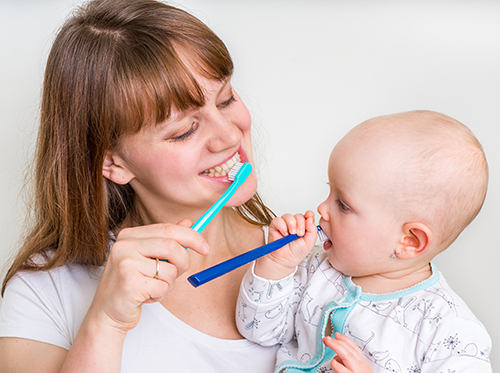
Another excellent preventive strategy consists of scheduling regular appointments with Drs. Keith Hinnant, Kristen Langworthy, Philip Brantly for your child. Between your youngster’s annual cleanings, make sure he or she brushes and flosses every day. It’s worthwhile for your little one to brush thoroughly for at least two minutes to remove any decay or plaque that has accumulated in the mouth, especially before bedtime.

Brushing Techniques

  • Move the brush both back and forth, and in circular gentle strokes.
  • Brush the outer surfaces, inside surfaces, and chewing surfaces of all teeth.
  • Place the toothbrush at a 45-degree angle to the gums.
  • Brush the tongue to remove excess bacteria and keep breath fresh.

It’s not always possible to prevent cavities from appearing in your son or daughter’s mouth. If your child does develop a cavity, our staff will notify you during the regular scheduled cleaning.

The cavity will need to be eliminated, even when it appears on a baby tooth. Our staff will remove the decayed part of the tooth and fill in the hole so your child doesn’t have to experience any pain.

You may wonder why a baby tooth has to be fixed if it is eventually going to fall out. Baby teeth hold spaces where your child’s permanent teeth have to grow in. If the former aren’t taken care of, multiple teeth may shift and the permanent ones won’t be able to grow in properly.

If you still have questions or concerns about your child’s baby teeth, or notice signs of a cavity, please don’t hesitate to contact our Goldsboro office and schedule an appointment. Remember, preventive steps can be taken to avoid bothersome cavities from forming in your child’s mouth.

Website Powered by Sesame 24-7™ | Site Map